
 Ella Brooks
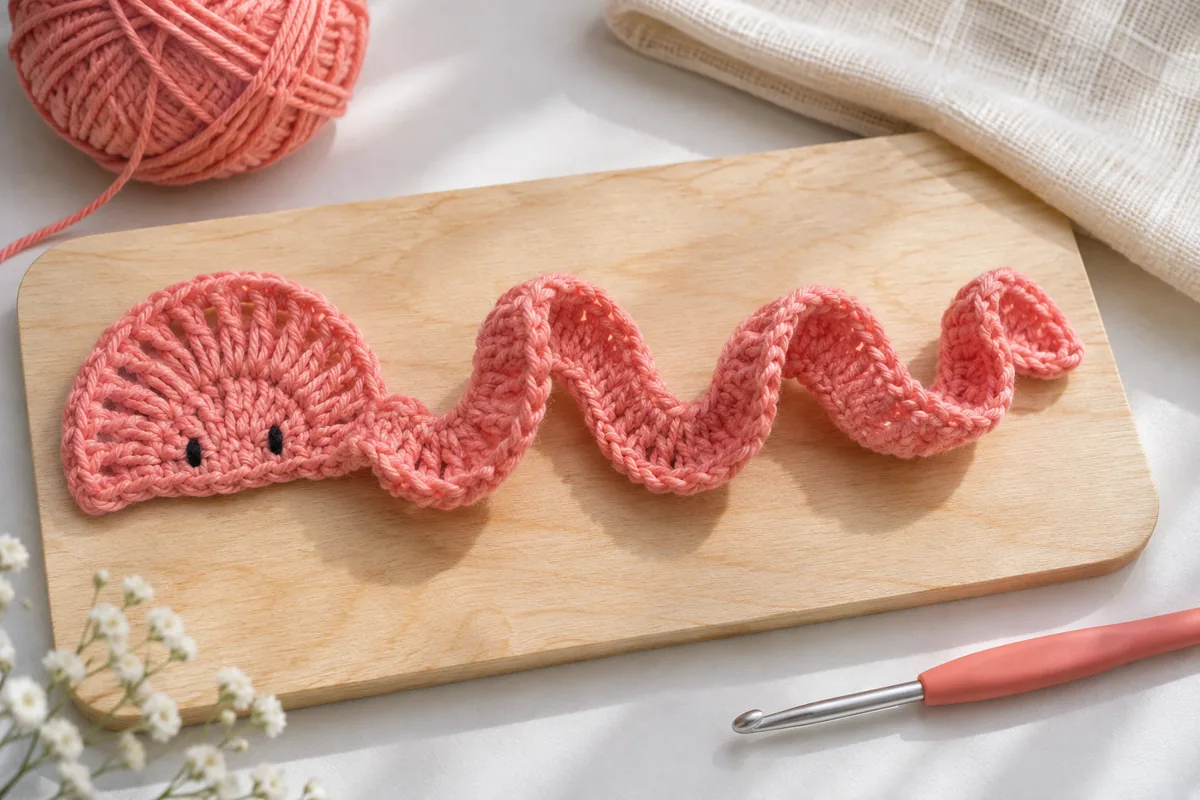
A turning spiral can hide the next chain just when a beginner needs to see it. This worm makes a useful focused exercise: identify one chain, put a complete group into it, then move on. You will use a single crochet, half double crochets and double crochets in US terms. Choose one cotton-and-hook combination below before starting; the three versions are alternatives, not stages of one project.
Finding the next empty chain
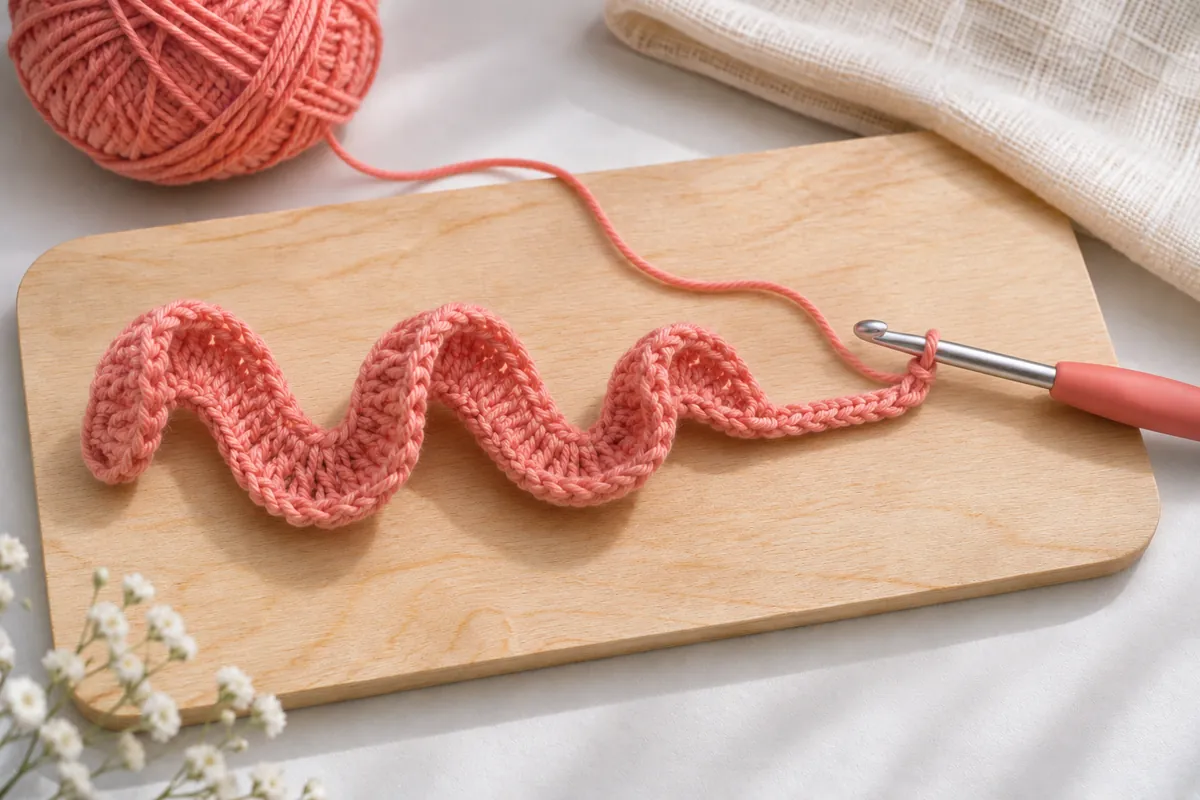
Keep the unworked chain between your thumb and finger, with the completed curl hanging freely. After the first special group, say “three in this chain” before moving your fingers along. If you lose your place, count complete groups from the starting tip instead of pulling the whole spiral straight. Mark the chain at the tail end now: that single chain belongs to the head, even though it may look too small for the fan.
Materials & size choice
| Size | Cotton | Hook | Starting chain | Ordinary body groups |
|---|---|---|---|---|
| Small | Fine 4-ply cotton | 2.2 mm | 41 | 38 |
| Medium | DK cotton | 3 mm | 36 | 33 |
| Large | Aran cotton | 4 mm | 31 | 28 |
You also need scissors, a tapestry needle, black yarn for eyes and an optional mouth, and contrasting thread to mark the last chain. No stuffing or wire is used. Finished dimensions, gauge, yarn quantity and working time are not supplied by the source; size names describe material combinations, not guaranteed lengths.
US crochet terminology
ch = chain; sc = single crochet; hdc = half double crochet; dc = double crochet; sl st = slip stitch. English uses US terms.
The complete pattern
Count the foundation before continuing; the loop on the hook does not count. Skip the chain directly below the hook and begin in the second chain. Mark the last chain at the starting-tail end for the head. Keep the chain relaxed enough to receive several stitches in each insertion point.
Small
- With fine 4-ply cotton and a 2.2 mm hook, chain 41.
- Begin in the second chain from the hook. In that same chain work 1 sc, then 2 hdc.
- Work 3 hdc into each following chain, leaving the very last chain unworked for the head (38 ordinary body groups).
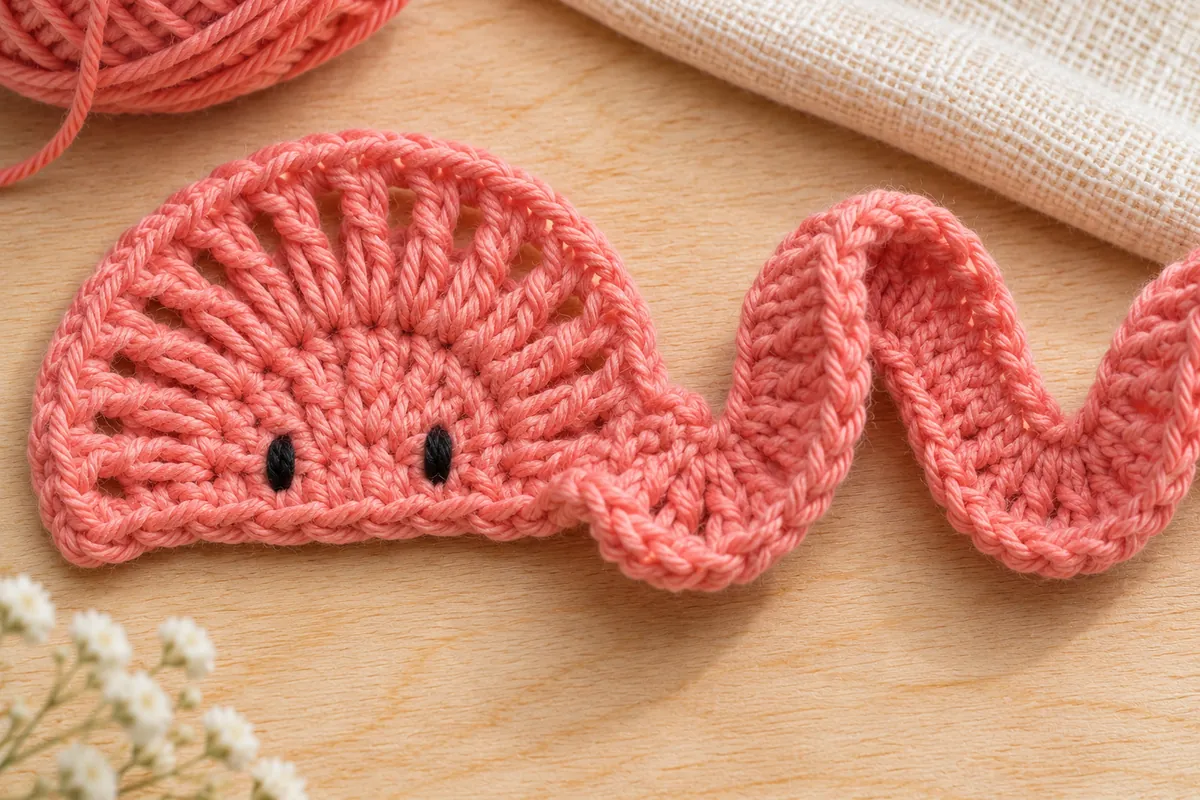
- Into that single last chain work the entire head: 1 hdc, 14 dc, 1 hdc, 1 sl st.
- Fasten off and weave in the ends on the back of the head.
Medium
- With dk cotton and a 3 mm hook, chain 36.
- Begin in the second chain from the hook. In that same chain work 1 sc, then 2 hdc.
- Work 3 hdc into each following chain, leaving the very last chain unworked for the head (33 ordinary body groups).
- Into that single last chain work the entire head: 1 hdc, 14 dc, 1 hdc, 1 sl st.
- Fasten off and weave in the ends on the back of the head.
Large
- With aran cotton and a 4 mm hook, chain 31.
- Begin in the second chain from the hook. In that same chain work 1 sc, then 2 hdc.
- Work 3 hdc into each following chain, leaving the very last chain unworked for the head (28 ordinary body groups).
- Into that single last chain work the entire head: 1 hdc, 14 dc, 1 hdc, 1 sl st.
- Fasten off and weave in the ends on the back of the head.
Find the next empty chain
Recognize the flat fan
A beginner’s stopping point
Pause before the head. The small, medium and large versions need 38, 33 and 28 ordinary groups respectively. Finding a missing group here is easier than undoing the face later. Do not count the live loop on your hook as a foundation chain.
Face and finishing
Lay the head flat. Mark two eye positions with contrasting thread and embroider a few black stitches. An embroidered mouth is optional. Secure ends across several stitch loops on the back without a bulky knot on the front; leave no long loose ends or easily released loops. The source also lists self-adhesive eyes of 6, 8 and 10 mm for small, medium and large respectively. Embroidered eyes are preferred; glued parts do not establish child safety. This decoration has no toy-safety certification.
Check the back
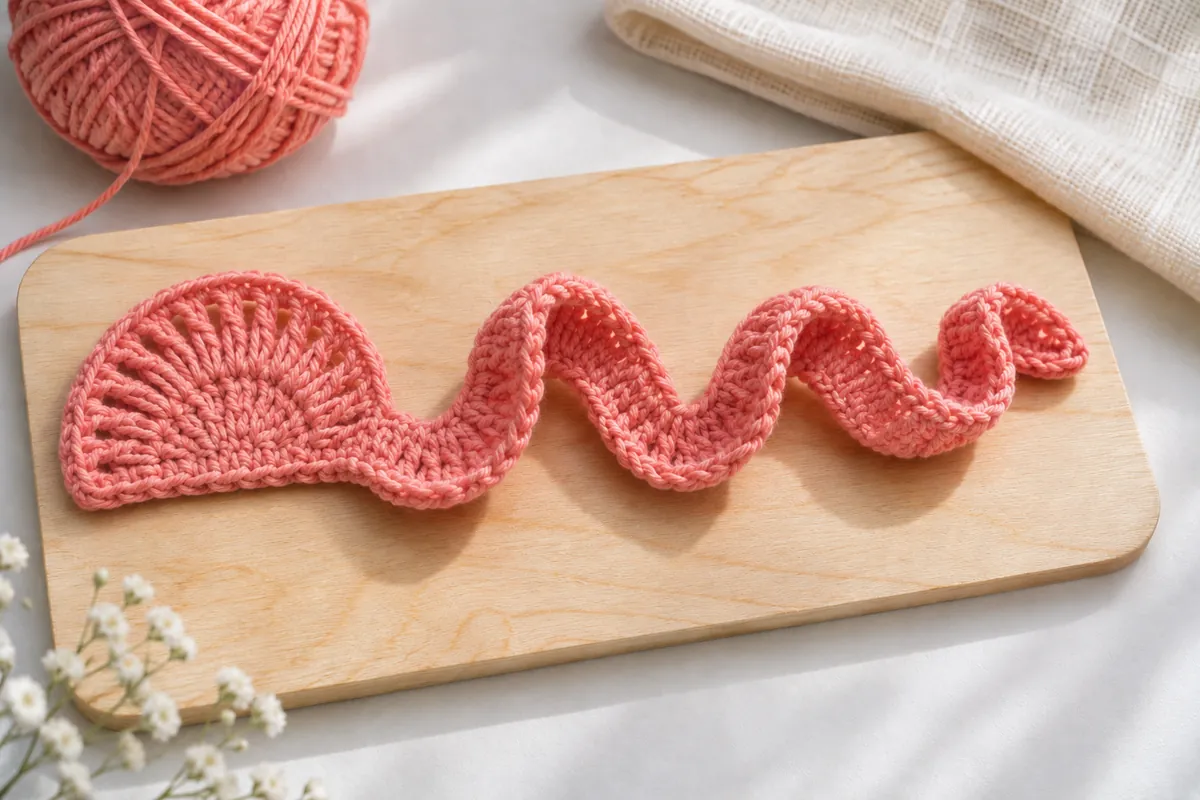
Arrange the spiral gently with your fingers; do not sew it into a tube or attach a separate head. Clean according to the yarn label and the eye attachment used. The source mentions a smaller hook for the foundation as an optional way to explore a tighter curl, but gives no size. It is not required for these three versions.
Check your work
The source calls the pattern untested. The chain positions and stitch sequence have been checked mathematically; no physical crochet test is claimed. If the curl is loose, check that each ordinary chain contains three hdc, not one hdc in each of three chains. If the head is elongated, check that all fourteen dc and both hdc are in the single final chain.
Foundation-chain audit
Skipped chain + first group + ordinary groups + head chain
| Small | 1 + 1 + 38 + 1 = 41 |
|---|---|
| Medium | 1 + 1 + 33 + 1 = 36 |
| Large | 1 + 1 + 28 + 1 = 31 |
Keep your pattern notes together
Save your chosen yarn, hook and chain count together before starting another version.